Planning to visit Mysore Palace? This guide covers the latest entry fee, ticket timings, what is included, extra charges, and practical tips to help you plan your visit without confusion.
Quick Ticket Information at a Glance
| Category | Entry Fee |
|---|---|
| Indian Adults | ₹50 |
| Indian Children (7–12 years) | ₹30 |
| Children below 7 years | Free |
| Foreign Tourists | Check the latest official rate before your visit (audio kit usually included) |
| Camera Fee (exterior/grounds) | Separate charge, photography banned inside the palace building |
| Audio Guide (Indian visitors) | Paid separately, multiple languages available |
| Palace Timings | 10:00 AM – 5:30 PM, open all 365 days |
| Sunday/Holiday Illumination | Free to view from outside (7:00 PM – 8:00 PM) |
| Sound and Light Show | Separate ticket, weekday evenings |
Prices for monuments in India get revised periodically, and Mysore Palace is no exception. Treat the numbers above as a reliable starting point, but confirm the exact figure at the ticket counter or on the official Karnataka tourism page before you travel, especially if you’re booking transport or guides around a tight schedule.
Current Mysore Palace Entry Fee
According to the official district tourism listing, the entry fee for the palace is ₹50 for adults and ₹30 for children between 7 and 12 years old, with the timings fixed at 10 AM to 5:30 PM every single day of the year, including public holidays. There’s no weekly closure, so you don’t need to worry about checking a “closed on Mondays” type schedule the way you might for some museums.
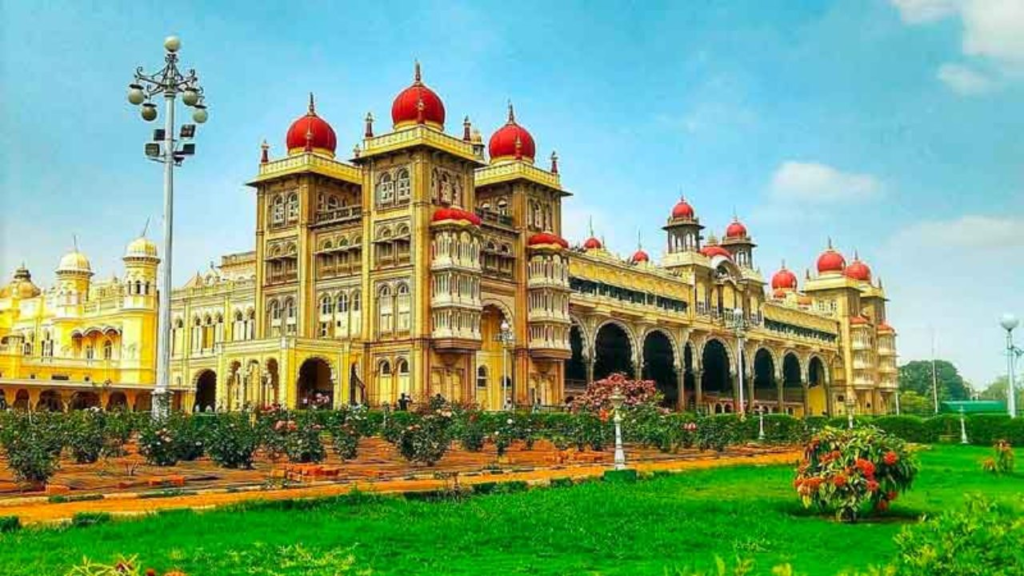
For children below 7, entry is free in most listings, though it’s worth double-checking at the counter since age-based exemptions can shift without much public notice. Foreign tourists pay a separate, higher rate, and this typically bundles in the audio guide kit as part of the package, which is a nice touch since Indian visitors have to pay for that separately. Because foreign tourist pricing tends to be revised more often than the domestic rate, don’t rely on a number you saw online; ask at the counter directly when you arrive.
There is no separate fee structure for weekdays versus weekends. Whatever you pay on a Tuesday is the same as what you’d pay on a Saturday, which simplifies planning if you’re trying to time your visit around a quieter day at the palace. If you want fewer crowds, early morning right after opening or the hour before closing tends to be noticeably calmer than midday.
Read Also: Mysore Palace Opening Time Today for Visitors 2026
What Is Included in the Entry Ticket
Your basic entry ticket gets you access to the main palace building and its principal halls, which is really the heart of the experience. This includes the Durbar Hall, with its ornate ceiling and sculpted pillars, and the Kalyana Mantapa, the marriage pavilion known for its stained glass domed ceiling and tiled flooring. You’ll also get to walk past the royal artifacts on display, including portraits, vintage furnishings, and sections of the royal costume and jewelry collection, depending on what’s currently on exhibit.
The ticket also covers access to the palace grounds and gardens surrounding the main building, so you’re not restricted to just the indoor halls. If you’re a foreign tourist, your ticket price typically folds in the audio guide as well, meaning you walk in with a self-guided commentary option already paid for.
Shoe custody is generally included or available at a nominal cost right at the entrance. Since footwear isn’t allowed inside the palace, this is a practical necessity rather than an add-on, and most visitors don’t think twice about it once they’re there. Wearing shoes that slip off easily will save you a few minutes of fumbling at the counter, and carrying a pair of socks is a small comfort upgrade on hot days when the marble floors can feel sharp underfoot.
What Is Not Included
This is where visitors often get caught off guard. Photography inside the palace building is strictly prohibited, full stop, regardless of what ticket category you’ve paid for. If you’re carrying a DSLR or any point-and-shoot camera, you’ll typically need to deposit it at the entrance, and there may be a small camera fee if you want to photograph the exterior grounds and gardens. Phone cameras are sometimes treated differently from professional equipment, so it’s worth asking at the gate rather than assuming.
The audio guide, if you’re an Indian visitor, is not bundled into your ₹50 ticket. It’s available in multiple languages for an additional fee., but you’ll need to pay for it on top of your entry fee. If you want a human guide instead of the audio version, licensed guides are available at the entrance for an additional negotiated fee, and this is also not part of your base ticket.
Some special exhibitions or restricted areas may have separate access rules. If you’re planning to visit them, check at the ticket counter before entering.
Parking, if you’re driving in, is also a separate cost and isn’t tied to your palace ticket in any way.
Also See: Does the Royal Family Still Live in Mysore Palace?
Buying Tickets (Counter vs Online)
The most straightforward way to get your ticket is directly at the counter near the entrance gates. Tickets are typically issued at specific counters tied to particular gates, the Varaha Gate on the south side is commonly used for general entry, while ticket counters for special evening programs like the Sound and Light show may open later, often from around 6:30 PM onward.
Online booking is mentioned as an option during peak seasons, particularly around festivals like Dasara when footfall spikes dramatically. If you’re visiting during a high-traffic period, it’s worth checking the official tourism website in advance to see if pre-booking is being offered, since queues at the physical counter can get long when the palace is drawing crowds in the tens of thousands. Outside of peak season, walk-up ticket purchases at the counter are usually fast and don’t require advance planning. Carrying small denomination cash is a good habit too, since counters dealing with high visitor volume aren’t always quick with change.
A practical tip here: avoid buying tickets from anyone outside the official counters, including touts who may approach you near the entrance gates claiming to offer faster access or bundled deals. Stick to the marked ticket windows. Mysore Palace is a heavily visited, well-regulated site, so there’s no real need to go through unofficial channels, and doing so only increases your chances of overpaying or getting misled about what’s actually included.
Sunday & Holiday Illumination – Is It a Separate Ticket?
No ticket is needed for the illumination itself. Every Sunday and on public holidays, the palace lights up from 7:00 PM to 8:00 PM, with close to 100,000 bulbs outlining the entire structure. This is viewed from outside the palace grounds, and there’s no charge for watching it.
The catch is timing. The palace interior closes at 5:30 PM, so if you’re hoping to tour the halls and then stick around for the illumination, you’ll have a gap of about an hour and a half to fill. Most visitors use this time to walk the gardens, grab food nearby, or just find a spot with a good view before the lights come on. Arriving even 20 to 30 minutes early helps, since the area around the palace gets crowded fast once people realize the show is about to start.
Since illumination is tied to Sundays and public holidays specifically, it won’t happen on a random Wednesday evening unless that Wednesday happens to fall on a declared holiday. If you’re planning your trip around catching this, check the calendar for the week you’re visiting rather than assuming.
See Also: Mysore Palace Today Special: What to See & Do Guide
Sound and Light Show Ticket
This is a different program from the illumination, and it’s easy to mix the two up. The Sound and Light show runs on weekdays, Monday through Saturday, and is skipped on Sundays, national holidays, and state festival days, which is the opposite pattern from the illumination schedule. It’s a roughly 45-minute presentation that walks through Mysuru’s 400-year history using light and sound effects projected onto the palace facade, and it wraps up with about 15 minutes of palace illumination at the end.
Tickets for this show are sold separately from your daytime entry ticket and from each other, adults and children are priced differently, with children’s tickets typically covering ages 7 to 12. These tickets are issued only at a designated counter, commonly the Varaha Gate counter on the south side, and sales usually begin in the early evening, around 6:30 PM, ahead of the show’s start time.
Because this runs on a completely separate ticketing window from your daytime visit, you can’t combine the two into one purchase. If you want both the daytime palace tour and the evening show, you’re making two separate trips to the ticket counter on the same day, once in the morning or afternoon, and once again in the evening.
Does the Entry Fee Change During Dasara?
Dasara is Mysuru’s biggest festival, and the palace becomes the centerpiece of the celebrations, drawing significantly larger crowds than usual. Despite the scale of the event, there’s no strong indication that the base entry fee structure changes specifically for Dasara. What does change is everything around the ticket: longer queues, extended illumination hours in some years, special evening programming, and at times, restricted access to certain areas due to the sheer volume of visitors.
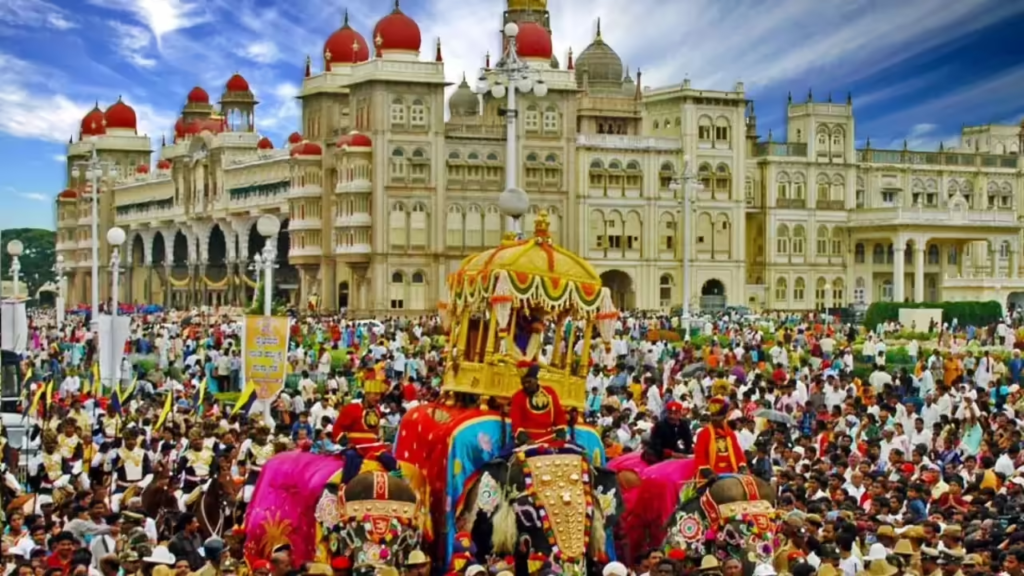
If you’re planning a Dasara visit, the more useful thing to check isn’t whether the fee goes up, it’s whether online ticket booking becomes available, since this is the period when advance booking is most likely to be offered to manage crowd flow. Festival pricing and access rules can shift year to year depending on how the event is organized, so checking the official Karnataka tourism page close to your travel dates is worth the five minutes it takes.
Keep in mind that Dasara also brings temporary changes to opening hours and special exhibits, like the display of the jewel-encrusted golden throne, which isn’t always on view outside the festival period. None of this is guaranteed to repeat exactly the same way each year, so treat anything you read about past Dasara seasons as a guide rather than a fixed rule.
Common Ticket Mistakes Visitors Make
Buying from someone outside the official counter is the most frequent misstep. Touts near the entrance sometimes approach tourists with offers of skip-the-line access or discounted bundles, and there’s no real reason to take that risk at a site where the official process is already fast and well organized.
Confusing the illumination with the Sound and Light show is another common mix-up. People assume showing up on a Sunday evening means they’ll catch the historical narration too, but the show runs on weekdays and the free illumination runs on Sundays and holidays, they don’t overlap.
Forgetting that photography inside the building isn’t allowed leads to unnecessary friction at the entrance, especially for visitors who didn’t realize they’d need to deposit their camera before going in. Carrying a bulky camera bag without knowing this in advance just adds an extra step to your visit.
Some visitors also assume the audio guide is included in the Indian ticket price because it’s bundled for foreign tourists. It isn’t, and if you’re expecting a guided narration without budgeting for it separately, you’ll either skip it or be caught off guard at the counter.
Lastly, showing up right at closing time expecting a full tour is a common planning error. With the palace closing at 5:30 PM and the interior covering a fair amount of ground, walking in with less than an hour left doesn’t give you enough time to see the major halls properly.
Practical Visitor Tips
Visit on a weekday morning if you want a quieter experience without sacrificing the option to catch the Sound and Light show in the evening. Weekday mornings tend to have shorter queues than weekend afternoons.
If your main goal is the illumination, plan your daytime activities to wrap up by late afternoon, then head back to the palace area by 6:30 PM to find a good viewing spot before the crowd builds.
UPI payments are common in India, but carrying a little cash can still be helpful for small expenses like shoe custody or in case digital payments are temporarily unavailable.
If you’re combining a Dasara trip with a palace visit, check ticket booking options online a few weeks ahead rather than assuming you can walk up and get a same-day ticket without delay.
Sources
- Mysore Palace Official Website
- Karnataka Tourism
- Mysuru District Administration
Before your visit, it’s a good idea to check the latest ticket prices and timings on the official Mysore Palace or Karnataka Tourism website, as these can change without prior notice.

Rahul Sharma is the founder and editor of BrindavanaGarden.com. He researches Brindavan Gardens, Mysore tourism, and nearby attractions using Karnataka Tourism resources, official websites, visitor reviews, maps, and trusted travel references. Every guide is carefully reviewed and updated to keep practical information such as timings, entry fees, travel tips, and visitor advice as accurate and useful as possible. His goal is to help travelers plan smoother, better-informed trips to Brindavan Gardens and the surrounding Mysore region.