Last Updated: July 2026
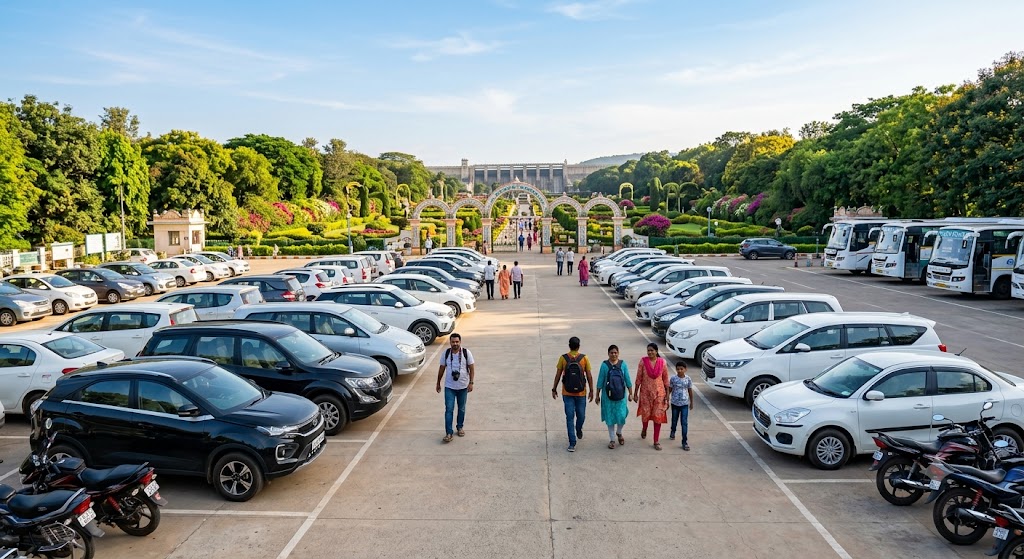
If you’re driving to Brindavan Gardens, parking is a separate charge from your entry ticket, and it’s collected before you even reach the ticket counter. A two-wheeler currently costs ₹20 to park, a car ₹100, and there’s a separate toll for the bridge leading up to the KRS Dam side. Brindavan Gardens is managed by the Cauvery Neeravari Nigam Limited (CNNL), and parking charges may be revised periodically. Treat the figures below as a solid planning reference, and confirm the exact rate at the parking gate itself before you rely on it for budgeting.
Quick Answer
- Car Parking Fee: ₹100
- Bike Parking Fee: ₹20
- Parking Location: Near the main entrance gate, on the Mysuru side of Brindavan Gardens
- Parking Timings: From around 8 AM until about 45 minutes after the evening fountain show ends
- Entry Ticket Included?: No — parking and entry tickets are charged separately
How Much Does Parking Cost at Brindavan Gardens
The parking fee is charged by vehicle type, collected at the entrance to the parking area rather than at the garden’s ticket counter itself. This charge is entirely separate from your entry ticket, which you’ll buy later at the main gate.
| Vehicle Type | Parking Fee | Notes |
|---|---|---|
| Bike | ₹20 | Parked in a dedicated two-wheeler section, usually closest to the gate |
| Auto | ₹50 | Separate from car parking |
| Car / Jeep | ₹100 | Excludes entry tickets and the KRS bridge toll, if applicable |
| Tempo Traveller | ₹100 | Parked in the larger-vehicle section |
| Bus | ₹200 | Requires more space; parked furthest from the gate |
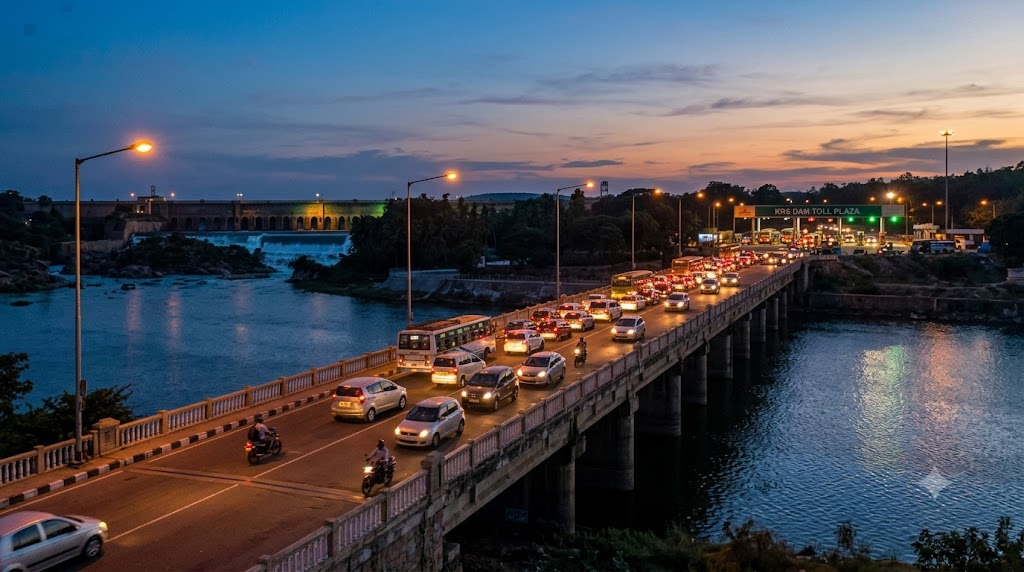
Two things trip up first-time visitors here. First, this is purely a parking charge — it doesn’t include your garden entry ticket, which is bought separately once you’re inside. Second, if you’re arriving via the bridge near the KRS reservoir, there’s an additional toll charge on top of parking, roughly matching the parking fee for your vehicle class. So a car visitor could realistically pay parking plus toll plus entry tickets for everyone in the vehicle, not just one flat fee at the gate.
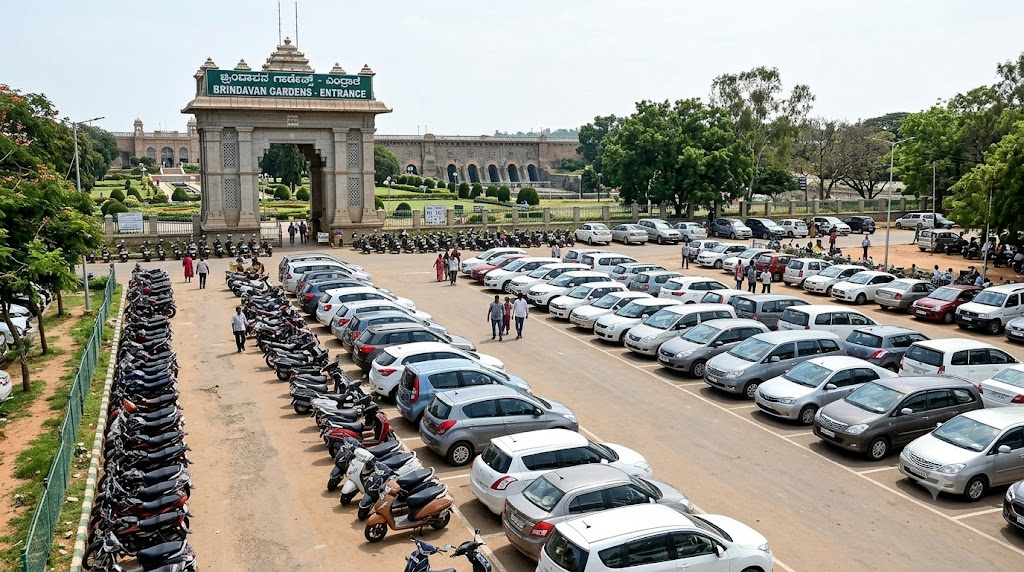
These rates have been revised upward more than once in recent years, so don’t be surprised if the number you see quoted online is a little out of date by the time you visit. The safest move is to confirm the current fee directly at the parking gate or entry counter when you arrive, or check with the managing authority (CNNL) if you’re planning your budget well ahead of the trip.
What Time Do Parking Charges Apply
Parking fees are collected from around 8 AM until about 45 minutes after the musical fountain show ends for the night — so if you’re timing your trip around the fountain timings, plan on the parking charge covering your whole visit rather than just the daytime hours. In practice, that means the charge applies for essentially the entire time the garden is open to vehicles, including the evening light show crowd. There’s no separate daytime-only or off-peak rate — arriving in the afternoon versus the evening show doesn’t change what you pay for parking, only how crowded the lot is likely to be.
Where Is the Parking Area Located
Parking is set up near the main entrance gate on the Mysuru side of Brindavan Gardens, around 21 km from Mysuru city. You’ll be directed to the vehicle parking zone before you reach the ticket windows and entry fee counters, and vehicle attendants typically wave cars and two-wheelers into separate sections. Buses and larger tourist vehicles are parked further out, since they need more turning space, which means bus and tempo traveller groups often end up walking a bit further to the entrance than car visitors do.
There isn’t a second, official overflow lot that most visitors know about, so if you arrive during a peak period — weekends, Dasara season, or just before the evening fountain show — expect the main lot to fill up and traffic to back up on the approach road itself. Some visitors park a short distance away on the roadside and walk in, but this isn’t an official parking arrangement and isn’t something we’d recommend relying on, since roadside space is limited and not really designed for it.
Brindavan Gardens Parking Location
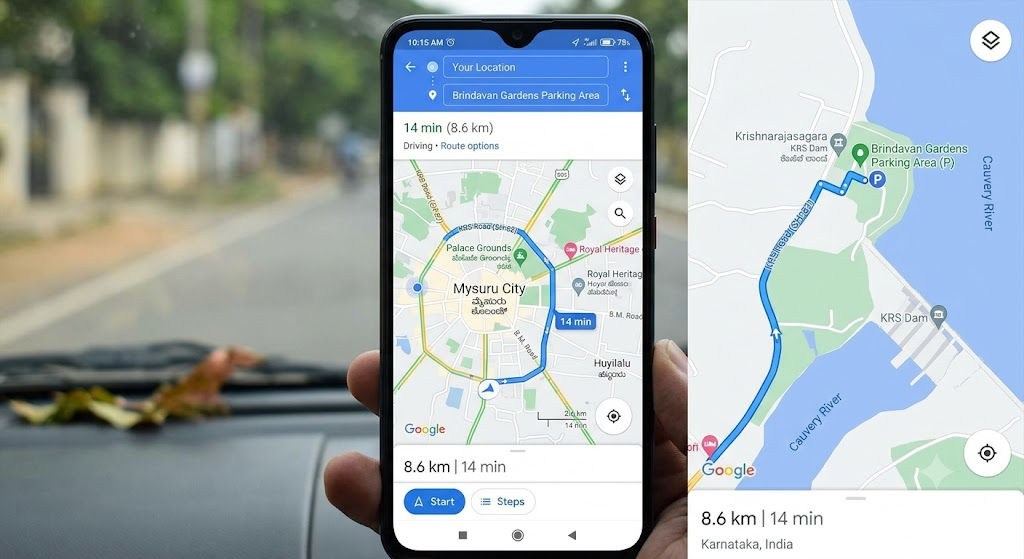
The easiest way to get there is to search “Brindavan Gardens” directly on Google Maps and follow the route to the main entrance — the parking area is right alongside it, so navigation will take you there without a separate search. If you’re coming specifically via the KRS Dam side, searching for “KRS Dam” will land you close to the same approach road. Since exact lane markings and gate positions can shift slightly as the area gets renovated, it’s worth following the road signs near the entrance rather than relying purely on the pin drop for the last stretch.
Visitor Tip: If you’re driving down from Mysuru city, traffic tends to bunch up right at the final approach to the parking gate, especially in the hour before the evening fountain show. Slowing down and merging into the vehicle queue early, rather than trying to push ahead near the gate, will usually get you parked faster than trying to find a shortcut.
Getting a Parking Spot Without the Wait
A few things genuinely help here, based on how the crowd flow at Brindavan Gardens typically works:
- Arrive before 4 PM if you’re coming for the evening show. The fountain illumination is the single biggest draw, and traffic into the parking area builds steadily from late afternoon onward. Getting there with two or three hours to spare before showtime means you park easily and can also explore the daytime garden.
- Weekdays are noticeably calmer than weekends. If your schedule allows it, a Tuesday or Wednesday visit will save you most of the parking hassle that weekend crowds create.
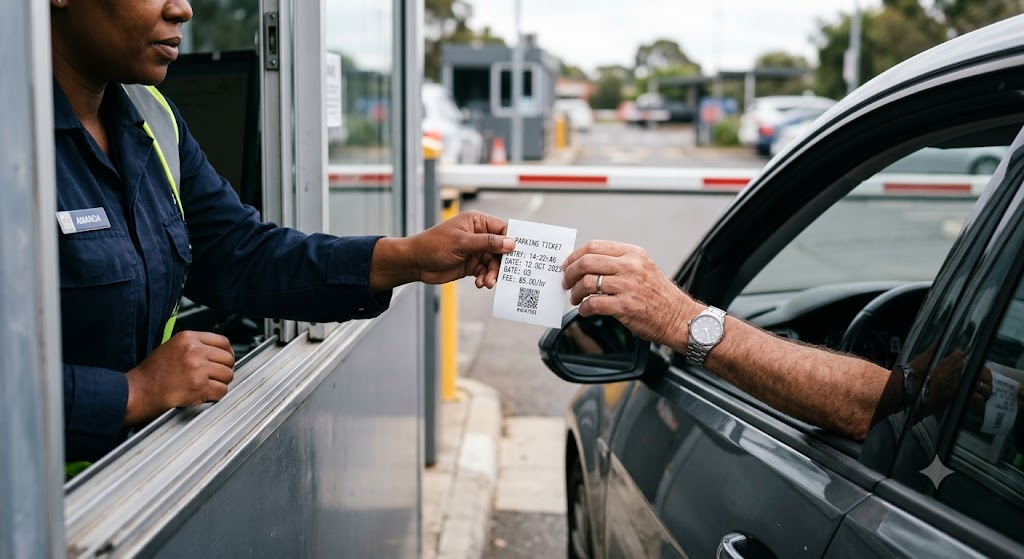
- Keep your parking slip. After paying, you’ll get a small ticket or token — hold onto it, since it’s typically what you show to reclaim your vehicle, especially in a large lot where rows aren’t always clearly marked.
- If you’re in a large group with two vehicles, park close together on arrival rather than assuming you’ll find each other later — the lot gets dense fast once the evening rush starts.
Accessibility and Other Visitor Questions
Brindavan Gardens has an electric vehicle service inside the garden meant for elderly visitors, people with physical disabilities, and children who may struggle with the amount of walking the terraced layout requires. This is a separate paid service, priced at roughly ₹100 per person based on recent reports, and it isn’t the same as vehicle parking outside. If mobility is a concern for anyone in your group, it’s worth asking the parking attendant whether a spot closer to the gate can be arranged on the day you visit — space right at the entrance is limited and isn’t guaranteed for every vehicle.
A few other questions come up often enough to be worth answering directly:
Is overnight parking allowed?
Brindavan Gardens isn’t set up as an overnight stop, and the parking area is meant for the duration of your visit during operating hours. If you’re planning a longer road trip and need overnight parking nearby, check with your accommodation rather than assuming the garden’s lot is an option.
Is parking generally safe?
The lot is attended and reasonably well managed during operating hours, with staff directing vehicles and issuing parking slips. That said, as with any large public parking area, it’s sensible to avoid leaving valuables visible inside your vehicle.
Are there dedicated spaces for disabled visitors?
There isn’t a clearly publicised, marked accessible parking zone that we could confirm. If you’re travelling with someone who has mobility needs, ask the attendant on arrival — they may be able to help you park closer to the gate, but this isn’t an official guarantee.
Is EV charging available at the parking area?
This isn’t officially confirmed. If you’re driving an electric vehicle and need to charge before or after your visit, it’s worth planning around charging points in Mysuru city rather than expecting one at the gardens.
Check this important guide if you want to visit with your elders: Is Brindavan Gardens Wheelchair Accessible? Complete Accessibility Guide 2026
Frequently Asked Questions
Does the parking fee include the entry ticket?
No. Parking and entry tickets are charged separately. You pay for parking when you arrive with your vehicle, then buy garden entry tickets separately once you’re near the gate.
Is there a separate toll on top of parking?
Yes, if your route brings you across the bridge near the KRS reservoir. The toll is charged per vehicle in addition to the parking fee, and the rate structure roughly mirrors the parking fee by vehicle type.
Can I park for free anywhere near Brindavan Gardens?
Not officially. The designated parking area charges a fee for every vehicle type. Roadside parking outside the official lot isn’t a sanctioned option and isn’t something to count on, particularly during busy periods.
Do parking charges change during Dasara or festival season?
The base parking fee structure doesn’t typically have a separate festival rate, but the lot fills up far faster during Dasara and other peak weeks, so arriving early matters more than usual during that period.
Before You Head Out
Budget parking as its own line item alongside your entry tickets and any toll charge, not as an afterthought — for a family arriving by car across the bridge, it can add up to a meaningful amount once you include everyone’s entry fee on top. And because these charges do get revised periodically, treat the numbers here as a solid planning estimate rather than the exact figure you’ll pay at the gate. If you’re still deciding when to go, it’s worth reading up on the best time to visit Brindavan Gardens separately, since that choice affects both crowd size and how easily you’ll find parking. Either way, if you’re timing your trip around the evening fountain show, arriving with a couple of hours to spare will save you more hassle than anything else on this list.
Disclaimer: Brindavan Gardens is managed by the Cauvery Neeravari Nigam Limited (CNNL), and parking fees, toll charges, and timings may be revised periodically, so they can differ from what’s listed here. Please confirm current rates and timings at the venue, or through official CNNL or Karnataka Tourism channels, before planning your visit around these figures.

Rahul Sharma is the founder and editor of BrindavanaGarden.com. He researches Brindavan Gardens, Mysore tourism, and nearby attractions using Karnataka Tourism resources, official websites, visitor reviews, maps, and trusted travel references. Every guide is carefully reviewed and updated to keep practical information such as timings, entry fees, travel tips, and visitor advice as accurate and useful as possible. His goal is to help travelers plan smoother, better-informed trips to Brindavan Gardens and the surrounding Mysore region.