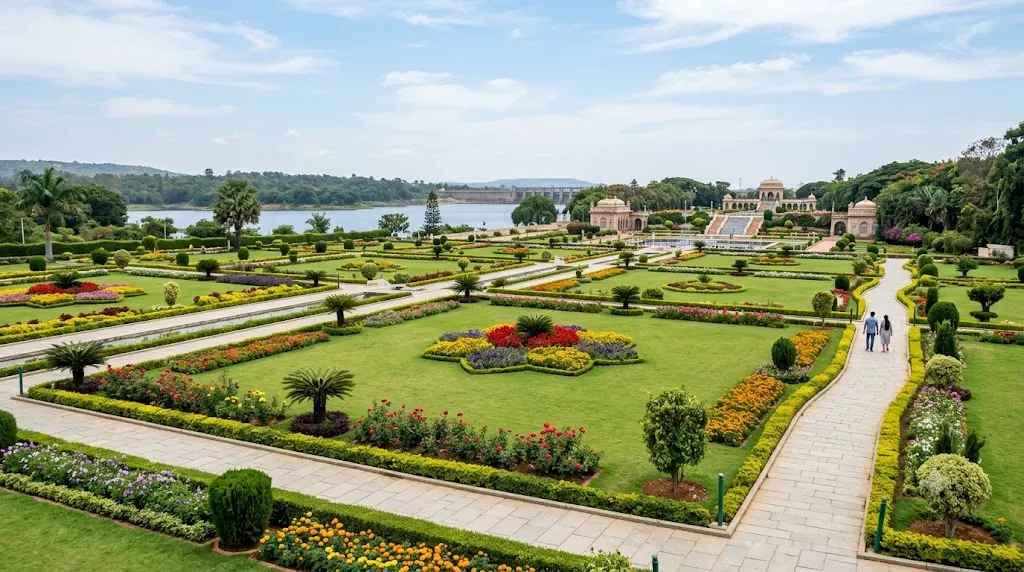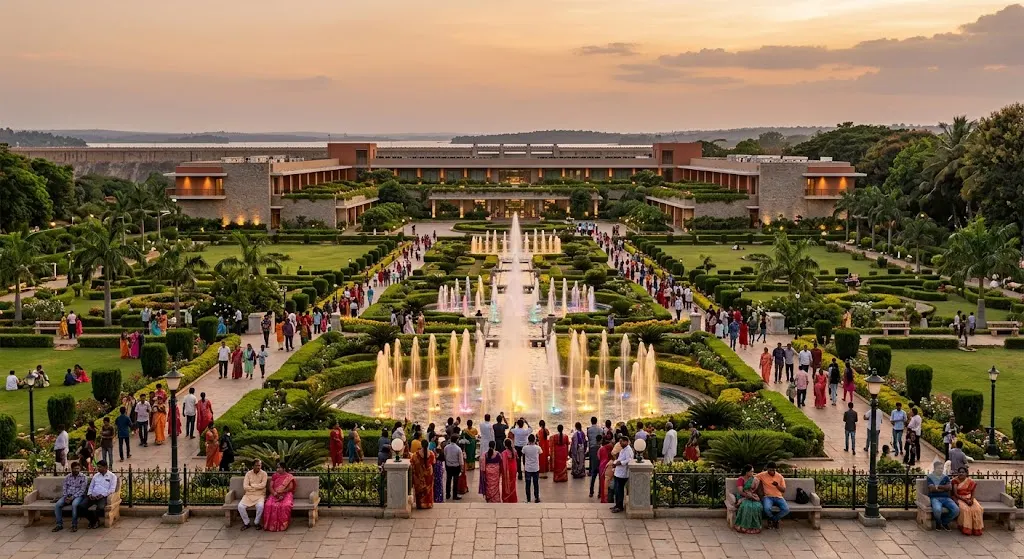
Brindavan Gardens changes noticeably depending on the month you visit. Weather, crowd size, and how the musical fountain show feels in the evening all shift with the season. This guide walks through what typically changes month to month, so you can pick a time that fits what you actually want from the visit — whether that’s fewer crowds, better photography conditions, or simply comfortable weather for walking around with family.
Quick Answer
If you want the short version: October to February is generally considered the most comfortable window to visit Brindavan Gardens. Temperatures are milder, the garden tends to look fuller after the monsoon, and evenings are usually comfortable enough to enjoy the musical fountain show without heavy heat or the risk of rain.
Within that window, early morning (close to opening time) and the evening fountain show are typically the two most practical times of day to visit. December and January tend to work well for most visitors, though both months can get busier around specific holidays, so a weekday visit is usually a better experience if you’d prefer smaller crowds.
If there’s one period worth planning around, it’s the peak summer afternoons from late March through May, along with monsoon weekends when heavy rain is forecast.
Quick Recommendation Table
| Purpose | Generally Recommended Time |
|---|---|
| Overall visit | October – February |
| Families | Winter evenings or weekday visits |
| Couples | Winter weekday evenings |
| Photography | Early morning or evening, November – February |
| Musical fountain show | Evening, winter months for clearer skies |
| Avoiding crowds | Weekday mornings, or July–August outside holiday weekends |
| Budget travelers | June – September, when hotel rates in Mysore are often lower due to fewer visitors |
Best Time to Visit Brindavan Gardens at a Glance
| Factor | Typically Recommended | Reason |
|---|---|---|
| Overall best season | October – February | Milder temperatures and a garden that has recovered from the dry summer months |
| Musical fountain | Evening show, winter months | Lower chance of rain disrupting the show, and comfortable waiting conditions |
| Photography | Morning or evening, Nov–Feb | Softer light and generally clearer air compared to summer haze |
| Avoiding crowds | Weekday mornings, monsoon months | Lower visitor turnout outside festival and holiday periods |
| Families | Winter evenings | Milder temperatures reduce fatigue for children and elderly visitors |
| Couples | Weekday evenings, winter | Fewer people around the fountain viewing area |
| Less comfortable period | April–May afternoons | Higher daytime temperatures can make walking the terraces tiring |
| Rainy season caution | June–September | Fountain shows are occasionally shortened during heavy rain |
Month-by-Month Weather, Crowd & Photography Table
| Month | Typical Temperature | Crowd Level | Photography | Recommendation |
|---|---|---|---|---|
| January | 18–29°C | Moderate (higher around holidays) | ⭐⭐⭐⭐⭐ | Excellent overall month |
| February | 20–31°C | Moderate | ⭐⭐⭐⭐⭐ | Excellent overall month |
| March | 22–33°C | Moderate | ⭐⭐⭐⭐☆ (morning/evening) | Good if visiting early or late |
| April | 24–35°C | Low–Moderate | ⭐⭐⭐☆☆ | Evening visit recommended |
| May | 24–34°C | Low (higher during school holidays) | ⭐⭐⭐☆☆ | Visit mainly for the evening fountain |
| June | 22–30°C | Low | ⭐⭐⭐⭐☆ | Good if you’re comfortable with occasional rain |
| July | 21–28°C | Low | ⭐⭐⭐⭐☆ | Green landscapes, carry rain protection |
| August | 21–28°C | Low | ⭐⭐⭐⭐☆ | Quieter month, weather can be unpredictable |
| September | 21–29°C | Moderate | ⭐⭐⭐⭐☆ | Good transition month |
| October | 20–29°C | High (Dasara season) | ⭐⭐⭐⭐⭐ | One of the best months to visit |
| November | 19–28°C | Moderate | ⭐⭐⭐⭐⭐ | Excellent weather and scenery |
| December | 17–28°C | Moderate–High (holiday season) | ⭐⭐⭐⭐⭐ | Excellent overall month |
Note: The temperatures above are typical average ranges for the Mysuru region and may vary slightly depending on the year and local weather conditions.
Month-by-Month Guide to Brindavan Gardens
January
January is typically one of the more comfortable months to visit. Mornings tend to be cool, and afternoons are usually mild rather than hot. The garden generally still shows some of the greenery built up from the monsoon months earlier in the year. Crowds can pick up around Republic Day and Sankranti/Pongal, so a weekday visit is usually the better choice if you’d prefer more space to walk around. Photography conditions are generally favorable, with clearer skies typical of this time of year. Good for: families, couples, first-time visitors, and photography.
February
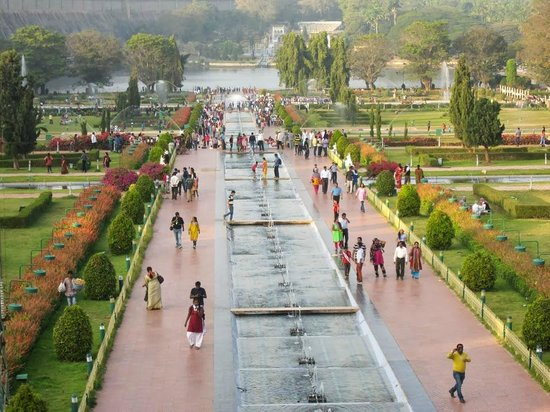
Conditions are broadly similar to January, though temperatures tend to rise gradually by the end of the month. It’s still comfortable enough for most of the day, which makes it a reasonable choice if you’re combining the gardens with other Mysore sightseeing on the same trip. Crowd levels are usually moderate — busier than the deep monsoon months but calmer than the December–January holiday stretch. The musical fountain show tends to run reliably, with fewer weather-related disruptions than in the monsoon months.
March
Early March generally retains some of winter’s comfort, but daytime heat tends to build noticeably by the second half of the month. If visiting in March, mornings or evenings are typically more comfortable than a midday visit. Crowds are usually moderate. This is a transition month — workable if you can be flexible about the time of day, less ideal if a midday visit is your only option.
April
Daytime temperatures in April are usually high enough to make an outdoor visit less comfortable, particularly between late morning and mid-afternoon. Some plantings may appear less vibrant during this period compared to cooler months, since the dry heat affects the garden’s overall condition. If April is your only option, an evening visit built around the fountain show is generally a more practical approach than a full daytime outing. Crowds tend to be lower on weekdays, though school holidays can bring more family visitors.
May
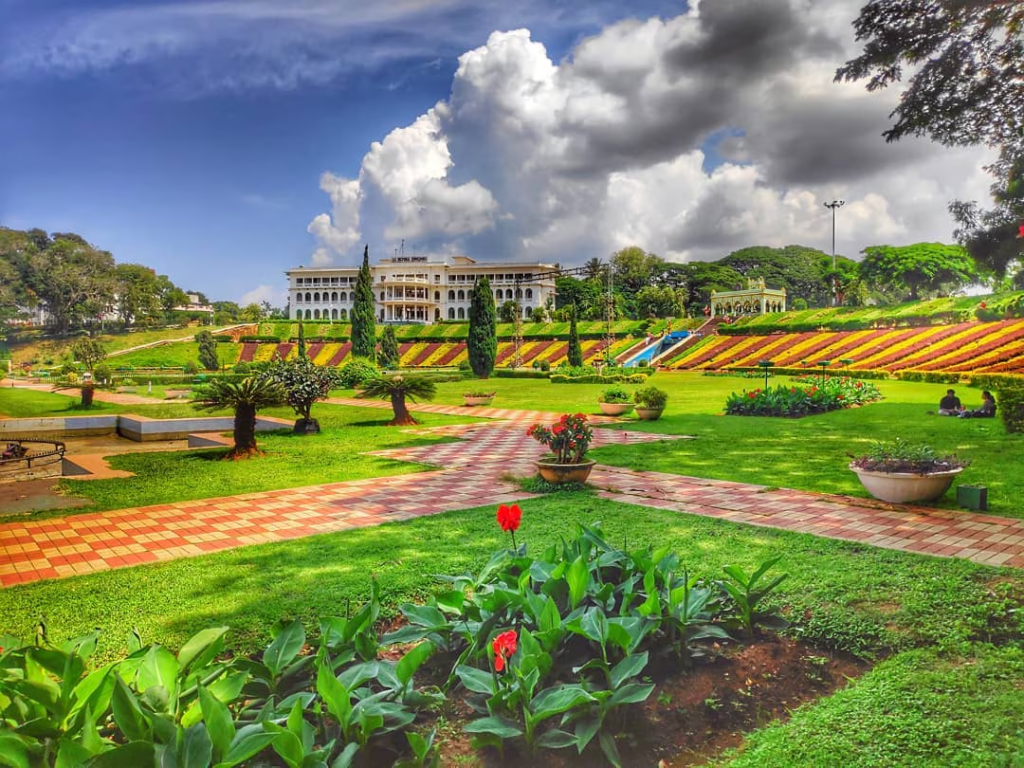
This is typically the warmest month of the year in this region, and daytime visits to the terraced lawns can feel tiring as a result. Evening visits for the fountain show remain a reasonably comfortable option once temperatures drop after sunset, though daytime photography can be affected by heat haze and stronger light. If a May visit is unavoidable, structuring the day around the evening show is generally more practical than a longer daytime visit.
June
The monsoon typically begins settling in during June, though the exact timing varies from year to year. Early June can still carry some residual summer heat, while rainfall tends to become more regular by mid-to-late June. Temperatures usually drop, and the garden often starts recovering some greenery after the dry summer months. Outdoor plans can be affected by sudden showers, and the fountain show is occasionally shortened during heavier rain, so checking the forecast before heading out in the evening is a reasonable precaution.
July
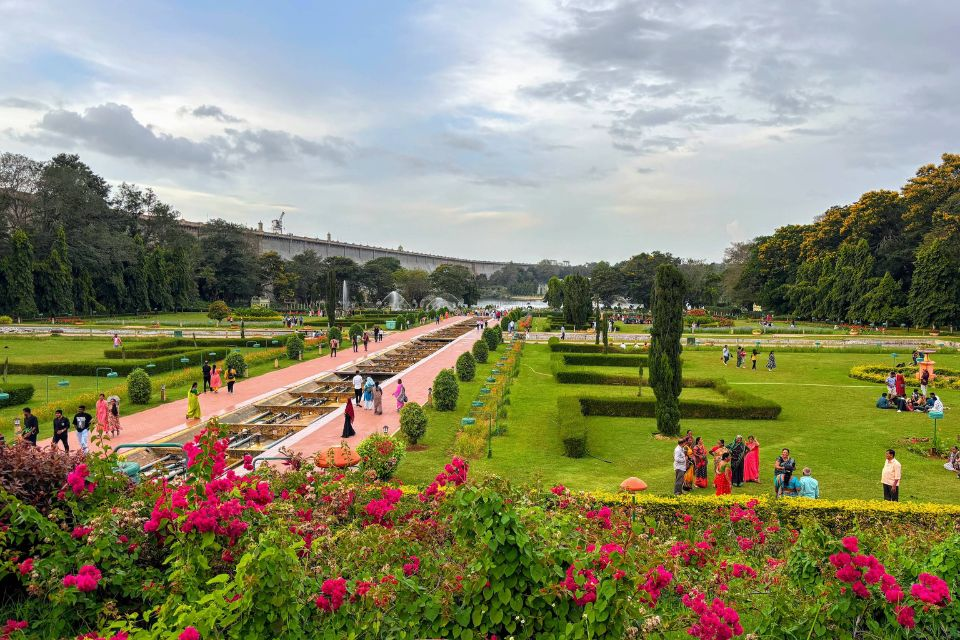
This is generally within the core monsoon period, with more regular rainfall and cooler temperatures than the preceding months. The garden typically looks greener during this stretch compared to April or May. This can be a reasonable month for visitors who don’t mind carrying rain protection and who’d prefer avoiding both the summer heat and the busier winter season. Photography after a rain shower can look noticeably different from the dry-season appearance, though it’s worth building some flexibility into evening plans in case the fountain show is affected by heavy rain.
August
Weather conditions generally continue the monsoon pattern from July, with rainfall often tapering slightly by the end of the month, though this varies year to year. Crowd levels tend to stay lower outside of the Independence Day weekend. This can be a reasonable choice for visitors comfortable with some weather uncertainty who’d prefer a quieter, greener visit. If avoiding any chance of rain interrupting an evening plan is a priority, this may not be the ideal month.
September
The monsoon typically starts easing during September, though some rain can still occur in the first half of the month. By late September, weather usually begins stabilizing ahead of the October–February period. This is generally a reasonable transition month — greener than the summer stretch, less rain-dependent than July–August, and with moderate crowd levels ahead of the festive season.
October
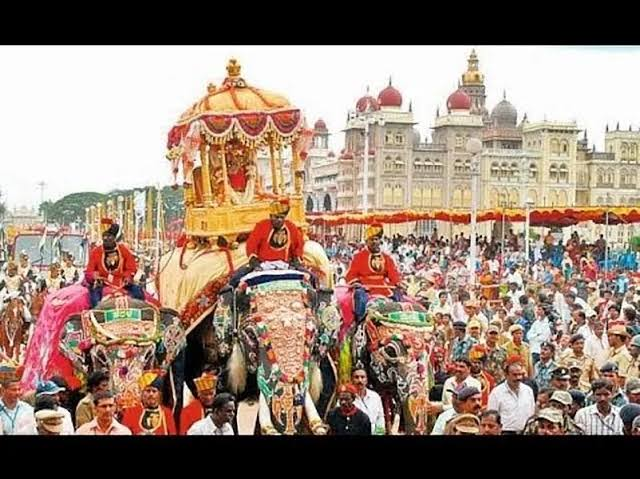
October is typically a busier month, since Mysore Dasara celebrations draw a significant number of visitors to the city, and Brindavan Gardens usually sees increased footfall as a result. Weather conditions during this month tend to be favorable — post-monsoon greenery and comfortable temperatures for both daytime and evening visits. The main trade-off is crowd size, particularly during the peak Dasara period. Visiting early in the month, before festivities are at their busiest, or planning around weekdays, can help avoid some of the heavier crowds.
November
Weather generally remains comfortable in November, and crowd levels typically ease compared to the Dasara period in October. This tends to be a balanced month overall — reasonable garden condition, comfortable temperatures, and manageable visitor numbers outside weekends. Photography conditions are generally favorable this month, with clearer air common at this time of year.
December
December combines generally favorable weather with higher crowd levels around Christmas and New Year, particularly during the final week of the month. Outside that specific window, December conditions tend to be comfortable — cool and dry, suitable for a full day outing. Visiting during the first three weeks of the month is a reasonable way to get the favorable weather without the New Year crowd surge.
Season-Wise Comparison: Summer vs Monsoon vs Winter
Summer (March – May)
Advantages: Weather tends to be more predictable with fewer sudden disruptions, and evenings after sunset are typically more comfortable than the daytime hours.
Disadvantages: Daytime heat can make walking the terraced lawns tiring, particularly for children or elderly visitors. Photography around midday tends to be affected by harsh light and haze, and some plantings may look less vibrant compared to the post-monsoon months.
Best suited for: Visitors whose travel dates are fixed to this period, provided the visit is planned around the evening show rather than a full day outdoors.
Monsoon (June – September)
Advantages: The garden typically appears greener during this period, temperatures are usually cooler and more comfortable than summer, and crowds tend to be thinner outside specific holiday weekends.
Disadvantages: Rain can be unpredictable, and the fountain show is occasionally shortened or delayed during heavier downpours. Pathways can also get slippery in places.
Best suited for: Visitors comfortable with some weather uncertainty who’d prefer a quieter, greener version of the garden, along with photographers interested in post-rain conditions.
Winter (October – February)
Advantages: Generally the most comfortable temperatures of the year, along with typically clearer skies for the fountain show and favorable photography conditions.
Disadvantages: This is also the peak visiting season, particularly around Dasara in October and the New Year period in late December, so specific weeks can bring noticeably larger crowds.
Best suited for: Most visitor types, including families, couples, photographers, and first-time visitors — with the main planning consideration being which specific dates to avoid if crowd size matters to you.
Best Time to Watch the Musical Fountain
The evening fountain show is typically the main highlight for most visitors, which is why the timing of the visit matters more here than almost any other factor in this guide.
- Arriving roughly 30–45 minutes before the show starts is generally advisable if you’d like a decent viewing spot, particularly on weekends and during the October–January period.
- Winter evenings tend to offer more reliable show conditions, since clearer skies reduce the likelihood of rain-related disruption.
- During the monsoon months, it’s worth checking the weather forecast before heading out, since heavier rain can shorten or delay the show.
- Weekday evenings are typically calmer than weekend evenings, making it easier to find an unobstructed view.
What first-time visitors often don’t realize: the viewing area fills up well before the show’s actual start time, especially on weekends, so visitors who arrive right at showtime frequently end up watching from farther back than they expected.
Best Time for Photography
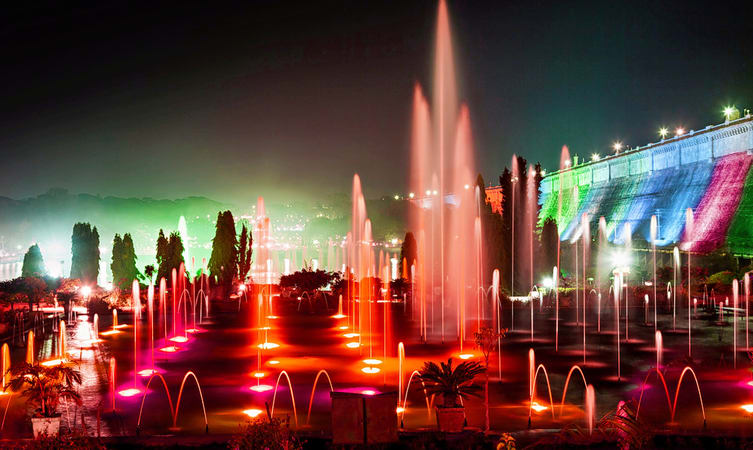
Photography conditions tend to be more favorable during two windows: shortly after the gardens open in the morning, when light is generally softer and crowds haven’t built up yet, and during the evening fountain show, when the lighting against a darker sky can produce stronger contrast in photos.
November through February generally offers clearer air and more consistent light throughout the day. Monsoon-season photography isn’t necessarily a write-off either — wet foliage and overcast skies shortly after rain can produce a noticeably different look compared to the typical dry-season shot.
Midday visits during most months tend to produce flatter, harsher light, so if photography is a priority, planning around morning or evening hours is generally more effective than a midday stop.
Best Time to Avoid Crowds
If a quieter visit matters more to you than ideal weather, the following periods tend to work well:
- Weekday mornings, in most months
- July and August, outside the Independence Day long weekend
- Early October, before Dasara festivities peak
- The first two weeks of December, before the Christmas–New Year period
Weekends throughout the winter season, along with most of October and late December, tend to be busier overall, largely because these periods coincide with more favorable weather and school holidays.
Best Time for Families
Families traveling with young children or elderly members generally find the cooler months — October through February — more manageable, particularly when the visit is planned around the evening fountain show rather than a midday walk. Milder temperatures typically mean less fatigue over the course of the visit. Weekday evenings during winter tend to offer a reasonable balance of comfortable weather and manageable crowd size.
If a summer visit can’t be avoided, a shorter daytime outing followed by the evening show is generally more practical than attempting a full day in the heat, since children in particular tend to tire more quickly during the hotter hours.
A tip worth knowing: there’s generally more shaded seating available near the upper terraces than near the main fountain viewing area, which can help if you’re managing young children during a wait before the show.
Best Time for Couples
Couples looking for a quieter, more relaxed visit tend to do better on winter weekday evenings, when the garden is generally less crowded than on weekends and the weather is comfortable enough to walk around without feeling rushed. If a weekend visit is the only option, arriving early for the fountain show still tends to help in finding a reasonably quiet spot away from the busiest section of the crowd.
Best Time of Day to Visit
- Morning (close to opening): Generally favorable for photography and a quieter garden experience, with cooler temperatures before the day heats up.
- Midday: Typically the least comfortable period, especially between March and May, due to higher temperatures and harsher light.
- Evening (fountain show): The primary reason most visitors come — arriving early is generally advisable for a good viewing spot, especially during winter and festival periods.
Sample Visitor Itinerary
For a first-time visit built around the evening fountain show, a fairly realistic schedule looks something like this:
| Time | Activity |
|---|---|
| 4:30 PM | Arrive and pass through the entrance |
| 4:45 PM | Walk through the lower terraces and main lawns |
| 5:30 PM | Explore the upper garden sections at a relaxed pace |
| 6:15 PM | Move toward the fountain viewing area to secure a seat |
| 6:45 PM | Wait for the show, using the time for photography if light allows |
| 7:00 PM | Musical fountain show |
| 7:45 PM | Head toward the exit before the post-show crowd builds up |
This itinerary assumes a typical evening fountain schedule. If timings change seasonally, simply adjust the arrival time while keeping a similar sequence.
Weather Tips
- Checking the day’s forecast before an evening visit during the monsoon months is generally a good precaution, since heavy rain can affect the fountain show.
- Carrying water and sun protection is advisable for visits between March and May, even in the evening, since daytime heat can linger into early evening hours.
- Winter mornings can occasionally be cool enough for a light jacket, particularly in December and January.
- Umbrellas tend to be more practical than raincoats during the monsoon, since visitors are usually standing in one place for the show rather than walking briskly.
What to Wear During Different Seasons
Summer (March–May): Light, breathable clothing, a hat or cap, and comfortable walking shoes are generally advisable. Darker colors can feel warmer under direct sun during the day.
Monsoon (June–September): Quick-dry clothing, a light waterproof layer, and shoes with reasonable grip are generally more practical, since some pathways can get slippery.
Winter (October–February): Light layers tend to work well — mornings and evenings can be cool enough for a light sweater, while afternoons are usually mild enough for lighter clothing.
Visitor Planning Tips
- Combining the Brindavan Gardens visit with other Mysore sightseeing earlier in the day, and saving the gardens for late afternoon into the evening show, is generally a more practical use of daylight hours, since the gardens are typically at their best in the evening anyway.
- If traveling during Dasara season, booking accommodation and planning garden visit dates in advance is generally advisable, given the increase in visitor numbers across the city.
- Weekday visits generally offer a more comfortable crowd experience than weekends, across most months.
- Checking current show timings and entry fee details closer to the travel date is generally more reliable than relying on older sources, since schedules can be adjusted seasonally.
- Parking near the entrance can fill up quickly during weekends and festival periods, so arriving a little earlier than planned is generally a reasonable buffer.
Common Mistakes Visitors Make
Visiting only during the day and skipping the evening show. The fountain show is typically considered the most distinctive part of the experience, so a daytime-only visit often means missing the main draw.
Arriving right at show time instead of earlier. By the time the show begins, the closer viewing spots are typically already taken. Arriving around 30–45 minutes early generally makes a noticeable difference.
Underestimating summer heat. Visitors unfamiliar with the local climate sometimes don’t anticipate how tiring a midday summer visit can be, which occasionally leads to cutting the visit shorter than planned.
Not checking the forecast during monsoon season. A sudden downpour can affect evening plans, and visitors who haven’t checked the forecast are often unprepared with rain protection.
Assuming every month offers roughly the same experience. The conditions at Brindavan Gardens shift fairly noticeably across the year, so treating all months as equivalent can lead to a visit that doesn’t match expectations.
Frequently Asked Questions
What is generally considered the best month to visit Brindavan Gardens?
December and January are typically seen as comfortable options, with milder weather and generally reliable evening fountain shows, though both months can be busier around specific holidays.
Is Brindavan Gardens worth visiting in summer?
It’s generally manageable if the visit is planned around the evening fountain show, with the daytime hours between roughly 11 am and 4 pm avoided where possible between March and May.
Does rain affect the musical fountain show?
Heavier rain can shorten, delay, or occasionally affect the fountain show during the monsoon months (June–September), so checking the forecast beforehand is generally a good idea.
What is generally the best time of day for photography?
Morning hours close to opening time and the evening fountain show tend to offer more favorable light, while midday light outside winter is typically harsher.
Is a weekday or weekend visit generally better?
Weekdays tend to offer a quieter experience with smaller crowds, particularly during the busier October–February period.
What should I wear during a monsoon-season visit?
Quick-dry clothing, a light waterproof layer, and shoes with reasonable grip are generally practical choices, since some pathways can get slippery in the rain.
Planning Summary
If this is a first visit, October through February generally offers the most comfortable overall experience, combining milder weather with a garden that’s typically at its fuller, greener best. Arriving in the late afternoon allows time to walk through the gardens in daylight before settling in for the evening fountain show. Weekdays are usually the more comfortable choice if avoiding large crowds matters, since weekends and festival periods — particularly October’s Dasara season and the last week of December — tend to draw considerably more visitors regardless of how good the weather is. For visitors with more flexible dates, checking current show timings and the local forecast shortly before the trip is generally the most reliable way to fine-tune the exact day.
Read Also: How to Reach Brindavan Gardens from Bangalore & Mysore (2026): Bus, Train, Car & Taxi Guide

name vn, founder of BrindavanaGarden.com. I write practical travel guides based on detailed research to help visitors plan their trip to Brindavan Gardens and nearby attractions in Mysore. My articles cover timings, tickets, travel tips, hotels, rules, and other useful visitor information to make every visit easier.