
If you want to understand what daily life in Mysuru actually looks like, skip another palace wing and head to Devaraja Market instead. It’s loud, colorful, a little chaotic, and completely unfiltered — which is exactly why it’s become one of the city’s most recommended stops, even for travelers who have no intention of buying anything.
A Market With Genuine History
Devaraja Market’s roots go back to the 18th century, during the reign of Tipu Sultan, when it existed as a modest weekly gathering for local produce. The market grew steadily over time, and the covered structure visitors walk through today largely took shape in stages beginning around 1886, with continued development through the reign of Nalwadi Krishnaraja Wadiyar.
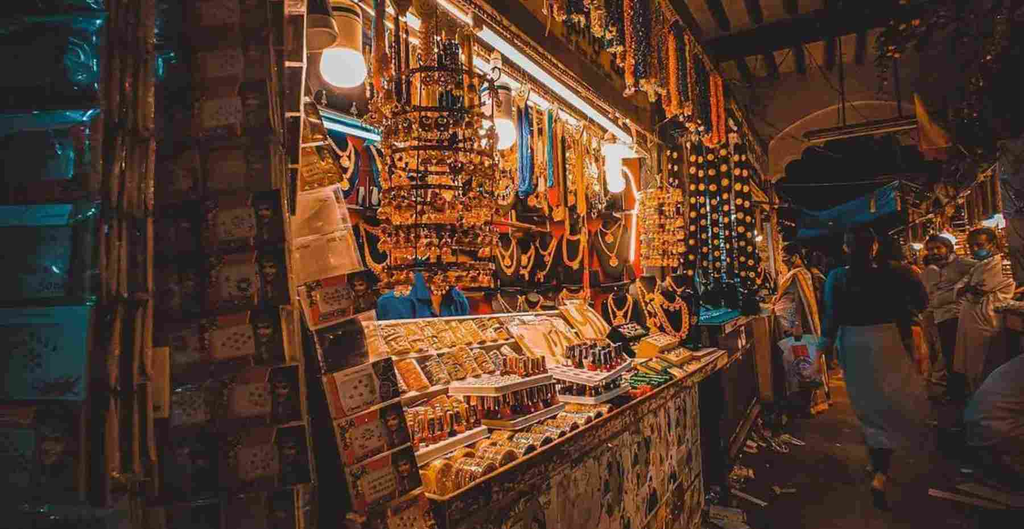
The market’s name honors Devaraja Wadiyar, one of the rulers of the Wadiyar dynasty, and its layout still reflects that older, organic style of Indian bazaar architecture — narrow covered lanes, tiled roofs, and shopfronts packed close together rather than any modern, planned mall layout. At the entrance, a distinctive clock tower (often referred to as the Dufferin Clock Tower nearby) serves as both a practical landmark and a symbol tied to the market’s long history.
Timings
Devaraja Market generally operates from around 6:00 AM to 8:30 or 9:30 PM, with slightly different closing times mentioned across sources — some list 6 days a week (Monday to Saturday), so if you’re planning a Sunday visit specifically, it’s worth confirming locally, since parts of the market may run on a reduced schedule that day.
Trading here genuinely starts before sunrise, with truckloads of fresh vegetables, fruit, and flowers arriving from surrounding farms well before the market officially “opens” for visitors — a detail that gives you a sense of just how functional and unpolished this place still is, despite being a major tourist stop.
What You’ll Actually Find
Spread across roughly 3 acres with over 800 shops, Devaraja Market isn’t a single type of experience — it’s really several markets layered into one space:
- Flowers: Enormous, fragrant stacks of jasmine, marigold, and rose, sold both loose and threaded into garlands.
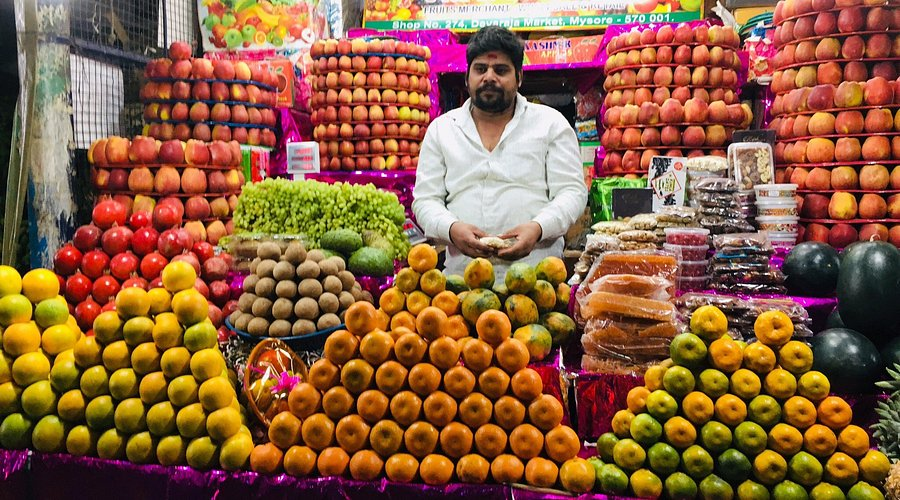
- Fresh produce: Fruits and vegetables sourced daily from farms in and around Mysuru — bananas in particular are sold in an impressive range of local varieties.
- Spices: This is one of the market’s biggest draws for visitors — cardamom, cloves, and a wide range of other aromatic spices sold in bulk at prices well below what you’d find in a packaged retail store.
- Sandalwood products and incense: Given Mysuru’s long association with sandalwood, this is a natural place to look for carved sandalwood items, soaps, and incense sticks.
- Mysore silk: While it’s not the only place in the city to buy it, some shops in and around the market area do sell Mysore silk sarees, and a few even let you see aspects of the weaving process.
- Local snacks and delicacies: Beyond shopping, the market is a good place to sample regional food, from traditional Mysuru dishes to more contemporary street snacks.
Best Time to Visit
Time of day: Morning is unanimously recommended by anyone who’s spent real time here. This is when the market is at its most vivid — fresh produce still being unloaded, flower vendors at their busiest, and the overall energy of the place noticeably higher than in the afternoon heat.
Day of the week: Saturdays tend to be especially lively, with a broader mix of shoppers and vendors than a typical weekday, though this also means more crowding if you’re not comfortable in tight, busy spaces.
Time of year: October to March remains the most comfortable season for walking through what is, in places, a fairly warm and enclosed market environment.
Practical Shopping Tips
- Bargaining is expected, particularly for non-food items like textiles, sandalwood products, and souvenirs. Vendors typically quote a higher opening price expecting some back-and-forth.
- Carry cash. Many smaller stalls in a market this traditional won’t have card or UPI payment set up, especially for smaller purchases.
- Photography is generally fine in the open market areas, though it’s respectful to ask before photographing individual vendors directly, and some specific shops (such as silk-weaving demonstrations) may restrict photography.
- Watch your belongings. Like any busy, crowded market, it’s sensible to keep bags zipped and valuables close, simply due to the density of people rather than any specific safety concern.
- Wear comfortable shoes. The market’s floors can be uneven and occasionally slippery near the produce sections, particularly later in the day.
How to Reach Devaraja Market
The market sits centrally on Sayyaji Rao Road, close enough to most of Mysuru’s major landmarks that reaching it is rarely a problem:
- On foot: If you’re already near Mysore Palace or St. Philomena’s Church, the market is within comfortable walking distance for most visitors.
- By auto-rickshaw or taxi: Easily available from anywhere in the city, and a short, inexpensive ride from most hotels.
- By local bus: Given the market’s central location, most city bus routes pass reasonably close by.
How Much Time to Set Aside
Most visitors spend around 45 minutes to an hour simply walking through and browsing, though if you’re planning to buy spices, silk, or sandalwood products and want to compare a few shops before deciding, it’s worth budgeting closer to 1.5 to 2 hours.
Combining Your Visit
Devaraja Market’s central location makes it an easy add-on to a broader walking loop through old Mysuru — it sits close to both Mysore Palace (a short auto ride or a longer walk away) and St. Philomena’s Church, making it possible to cover all three landmarks in a single half-day without needing to backtrack across the city.
Quick Reference
| Detail | Information |
|---|---|
| Established | 18th century (current structure from 1886 onward) |
| Timings | Approx. 6:00 AM – 8:30/9:30 PM |
| Entry fee | Free |
| Best time to visit | Morning, October–March |
| Time needed | 45 minutes – 2 hours |
| Best buys | Spices, sandalwood products, Mysore silk |
If shopping for local produce and spices has you thinking about food, Devaraja Market is also one of the better spots in the city to sample regional Mysuru snacks before continuing your day’s sightseeing.
Also See: Karanji Lake, Mysore: Timings, Entry Fee, Boating & Aviary Guide