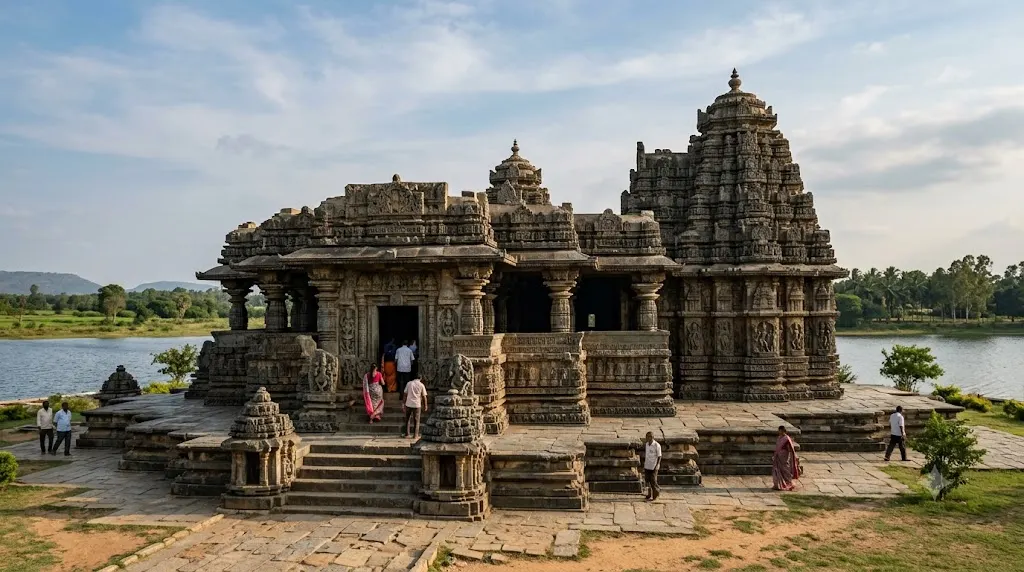
If you have already seen the main Mysore attractions and want to add something quieter to your trip, Venugopala Swamy Temple Mysore is a good place to consider. It is at Hosa Kannambadi, near the KRS Dam and Brindavan Gardens.
And there is a pretty unusual story behind this temple.
The temple you see today is not standing on its original site. The old temple was in Kannambadi village and was later submerged when the KRS reservoir was created. The historic structure was documented, dismantled and eventually rebuilt at Hosa Kannambadi.
That history changes the way you look at the place. It is not just another old temple where you take a couple of photos and leave. The stonework is worth looking at properly, and the setting near the KRS backwaters makes the visit quite peaceful.
If you are planning a Brindavan Gardens trip, you can easily fit this temple into the same outing. No need to make a separate full-day plan for it. In fact, that is probably the best way to see it.
Quick Information
- Location: Hosa Kannambadi, near KRS Dam, Mandya district, Karnataka
- Distance from Brindavan Gardens: About 9 km by road
- Distance from Mysuru: Roughly 28–30 km, depending on the route
- Timings: Commonly listed around 9:00 AM to 6:00 PM; timings can vary, so confirm locally before travelling
- Entry Fee: Generally no entry fee
- Main Deity: Lord Venugopala, a form of Lord Krishna
- Best Time: October to February for comfortable weather
- Best Experience: Late afternoon and sunset
- Best Transport: Private car or taxi
Venugopala Swamy Temple Mysore: History and Overview
The history is probably the most interesting part of the visit.
The original Venugopala Swamy Temple dates back to the 12th century and is associated with Hoysala architecture. It originally stood in Kannambadi, a village that later came under the KRS reservoir after the Krishna Raja Sagara Dam project was developed.
When you hear that an entire historic temple was submerged, it sounds almost unbelievable. But that is what happened here.
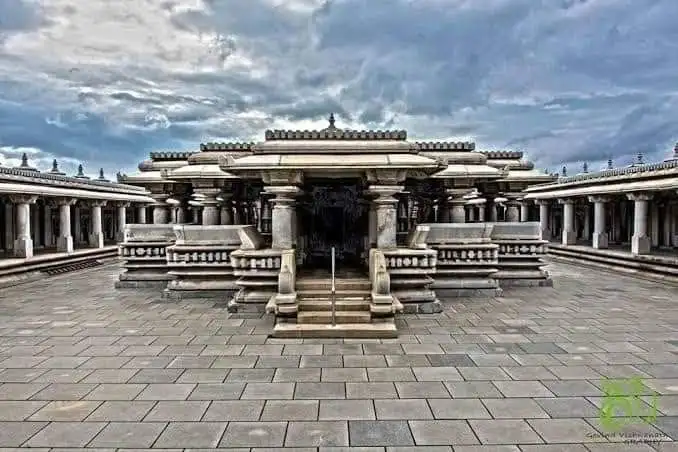
The dam project was planned in the early 20th century, and by around 1930 the old settlement and temple complex had been submerged. Whenever the reservoir level dropped significantly in later years, parts of the old temple could become visible. This unusual situation eventually brought attention to the need to preserve the monument.
The temple that stands at Hosa Kannambadi today is not simply a newly built structure made to look old. The original temple was carefully documented before the reconstruction. Thousands of photographs were taken, and individual stones were marked before being dismantled and put back together at the new location.
That is a pretty big job when you think about it.
The restoration was carried out with support from the Khoday Foundation under Sri Hari Khoday. The reconstructed temple was completed in 2011. Its present location is close to the KRS backwaters, so the surroundings are quite different from the original village setting.
When you visit, don’t rush straight to the main shrine, take a photo and leave. Spend a few minutes looking at the stone pillars, carvings, entrance and other architectural details. You start noticing things once you slow down.
For people interested in Karnataka’s old temples, this combination is what makes the place special:
Hoysala architecture + KRS Dam history + a relocated historic temple.
You don’t come across that story at every Mysore sightseeing spot.
Timings, Ticket Price & Entry Fee (2026 Updated)
This is one detail I would check before leaving Mysuru.
The reason is simple: online sources do not all give the same visiting hours. Several recent travel sources list the temple at around 9:00 AM to 6:00 PM, while some other listings mention a split morning-and-evening schedule.
So, if you are coming from Bengaluru or travelling a long distance specifically for the temple, don’t blindly depend on one third-party listing for the exact closing time.
| Visitor Information | 2026 Details |
|---|---|
| Temple entry | Generally free |
| Ticket counter | No regular entrance ticket reported |
| Morning visit | Check locally before departure |
| Evening visit | Check locally before departure |
| Best practical window | Late afternoon |
| Photography | Follow on-site instructions |
There is generally no regular entry fee for visiting the temple. That’s convenient if you are already planning a KRS sightseeing trip because you don’t have another entrance ticket to add to the budget.
One thing worth remembering: this is a separate attraction from Brindavan Gardens. The gardens have their own entrance arrangements and timings. Don’t assume that the temple follows the same schedule.
The facilities around the temple are also more limited than what you will find at places such as Mysore Palace or Brindavan Gardens. Food options immediately around the temple are limited, so carrying water is a sensible idea, especially if you are travelling with kids or elderly family members.
And if photography is your main reason for visiting, keep an eye on the instructions at the temple. Temple photography rules can be different from those at normal tourist attractions. If you are told not to photograph a particular area, simply respect it. Ayyo, no photo is worth getting into an argument over.
How to Reach Venugopala Swamy Temple Mysore
For most travellers, going by road is the easiest option.
From Mysuru, head towards the KRS Dam and Brindavan Gardens area and continue towards Hosa Kannambadi. The temple is approximately 28–30 km from Mysuru according to commonly cited road estimates.
From Brindavan Gardens, it is much closer—around 9 km by road.
By Car or Taxi
A car or taxi is the most convenient choice, especially if this temple is part of a larger Mysore sightseeing plan.
A practical route is:
Mysuru → KRS Dam/Brindavan Gardens → Hosa Kannambadi → Venugopala Swamy Temple
If you are travelling with family, I would personally prefer this option because you are not tied to a bus timetable. You can spend as much or as little time as you want at the temple and then continue to the next stop.
It also makes sense if you are planning to visit Brindavan Gardens later in the day.
By Public Transport
Public transport is not the strongest point of this attraction.
Visitor sources indicate that regular direct public transport to the temple is limited. You may be able to reach the broader KRS area and then need another option for the final part of the journey.
For that reason, a private car or hired taxi is much easier if you want a relaxed visit.
I would not choose this place as a destination where you want to spend half your day figuring out connections. Keep it simple.
From Brindavan Gardens
Already visiting Brindavan Gardens? Then definitely consider adding the temple.
The road distance is around 9 km, although the exact distance can change depending on the route you take.
A useful plan is to visit the temple during the late afternoon, spend some time around the KRS backwaters and then head towards Brindavan Gardens for the evening.
That way, you are not making two separate trips from Mysuru.
Best Time to Visit and Things to Do
There isn’t one perfect month for everyone. It depends on whether your priority is weather, scenery, photography or simply avoiding the heat.
For comfortable sightseeing, October to February is a good period. The weather around Mysuru is generally more pleasant than during the hotter months, and the area around the KRS reservoir can look particularly nice when there is good water in the reservoir.
Visit in the Late Afternoon
Late afternoon is a practical choice for a first visit.
The temperature is usually easier to deal with, and you can take your time looking around instead of walking through the complex in the middle of the afternoon heat.
There is another small advantage. As the sun starts moving towards the horizon, the KRS backwaters and surrounding landscape get a different look.
If you enjoy photography, this part of the day can be much nicer than arriving at noon.
Explore the Hoysala Details
Don’t just stand at the entrance.
Walk around the areas that visitors are allowed to access and look at the carved stonework, pillars, walls and other architectural details. You don’t need to be an architecture expert to appreciate it.
The reconstruction story becomes much more interesting when you remember that the original structure was documented, the stones were marked and the temple was reassembled at the new location.
Once you know that, even a simple-looking stone detail starts feeling different.
Enjoy the KRS Backwaters
The temple’s surroundings are another reason to visit.
You are not coming here only to see a building. The open landscape and KRS backwaters give the place a quieter atmosphere than many of the more crowded Mysore attractions.
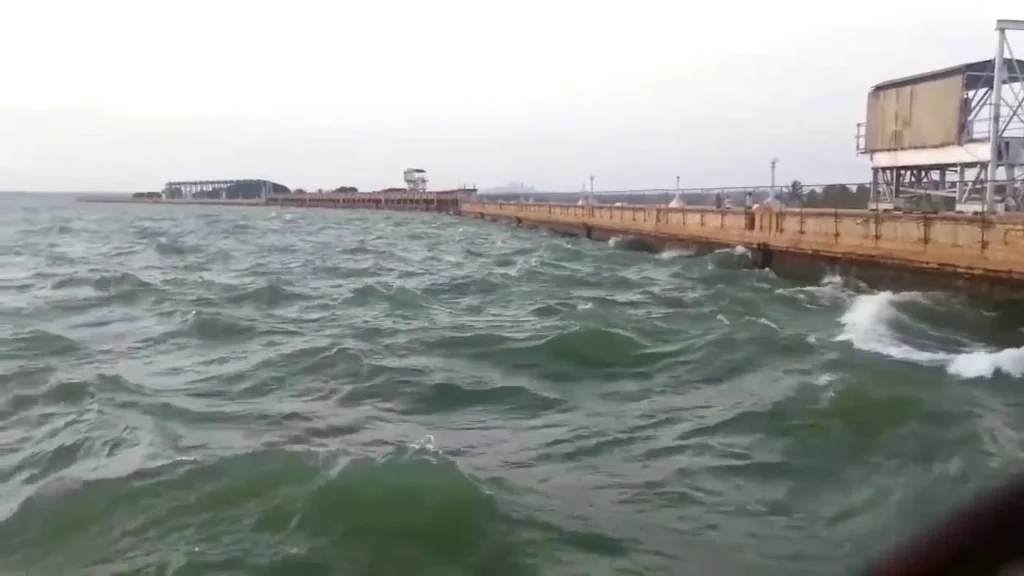
Take a little time to look around instead of treating it as a five-minute photo stop.
Combine It With Brindavan Gardens
This is probably the easiest way to fit the temple into your itinerary.
Brindavan Gardens is only about 9 km away, so you can visit both attractions during the same outing rather than travelling separately from Mysuru.
If your plan includes the musical fountain show, keep enough time between the temple visit and your arrival at the gardens. Don’t leave the temple at the last possible minute and then expect the road, parking and entrance to go perfectly. That’s how a relaxed evening turns into a rushed one.
My Personal Tips & Common Mistakes to Avoid
The biggest mistake first-time visitors can make is thinking of Venugopala Swamy Temple like one of Mysuru’s major city attractions.
It isn’t.
You won’t find the same level of tourist infrastructure, restaurants and frequent public transport that you get around the major attractions.
It is better to think of it as a heritage stop near KRS.
Here are the things I would keep in mind.
1. Check the timing before leaving Mysuru.
This is the most important one. Online sources currently disagree about the exact opening schedule. Don’t depend blindly on one Google result or one travel website.
A quick local confirmation can save you an unnecessary drive.
2. Carry water.
Facilities immediately around the temple are more limited than at the major Mysore attractions.
If you are travelling with children, keep water with you from the beginning.
3. Wear comfortable clothes and footwear.
You may spend some time walking around the complex and surrounding area. Comfortable footwear is simply easier.
There is no prize for wearing uncomfortable shoes on a sightseeing day.
4. Follow photography instructions.
Some visitor reports mention restrictions on photography inside the temple. If photography is not allowed in a particular area, keep the phone or camera away.
Temple etiquette comes first.
5. Don’t expect a big food market outside.
This is not a place where you should arrive expecting a row of restaurants and cafés right outside the entrance.
If you are travelling with children, carry water and a few basic essentials.
6. Give the temple enough time.
Around 30–60 minutes can be enough for a basic visit, but don’t rush through it just to tick another attraction off your list.
The architecture deserves a proper look.
7. Don’t visit only for the temple building.
The KRS backwaters and the story of the temple’s relocation are a major part of the experience.
Once you understand what happened to the original Kannambadi temple, the present structure becomes much more meaningful.
Nearby Places to Visit
The temple works best when you treat it as part of a wider KRS and Mysore sightseeing plan.
Brindavan Gardens
Brindavan Gardens is the most obvious combination.
It is close to the temple and is known for its landscaped gardens, fountains and evening atmosphere. If you are planning to watch the musical fountain show, don’t cut your travel time too close.
Give yourself enough time for the road, parking and entrance.
KRS Dam
The Krishna Raja Sagara Dam is directly connected to the history of the temple.
The reservoir changed the original location of Kannambadi and eventually resulted in the old temple being submerged.
So visiting the dam after learning about the temple’s history actually adds some context to the trip. You can understand why the temple had to be moved in the first place.
Ranganathittu Bird Sanctuary
If you enjoy birds and nature, Ranganathittu is another useful addition to a Mysore-area itinerary.
The experience is quite different from the temple and Brindavan Gardens. Instead of architecture and landscaped gardens, you get a nature-focused stop.
If you have enough time, it can make the overall trip more varied.
Mysore Palace
Spending a full day in Mysuru?
Mysore Palace can be included separately as part of your city sightseeing route.
I wouldn’t try to rush from one end of the city to another just to squeeze everything into a single afternoon. Mysore is much more enjoyable when you give each area some breathing room.
Chamundi Hills
Chamundi Hills is another major Mysore attraction.
But again, don’t try to put every famous place into one rushed itinerary.
For a more relaxed day, group Venugopala Swamy Temple, KRS Dam and Brindavan Gardens together. Keep the major city attractions, such as Mysore Palace and Chamundi Hills, for another part of the trip.
Conclusion
Venugopala Swamy Temple Mysore is one of those places that makes more sense once you know the story behind it.
At first glance, you may simply see a beautiful old-style temple near the KRS backwaters. But then you learn that the original temple stood in Kannambadi, was submerged after the KRS reservoir was created, and was later carefully reconstructed at Hosa Kannambadi.
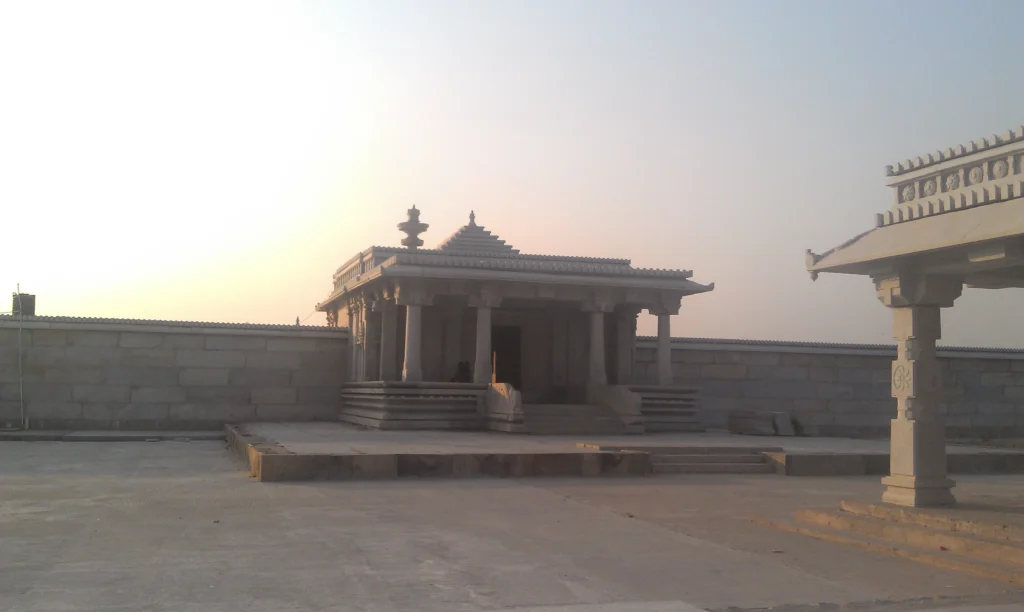
That changes the experience.
I would especially recommend the temple to travellers who are already visiting Brindavan Gardens or KRS Dam. You don’t need half a day here, and the quieter surroundings are a nice change from Mysuru’s busier tourist spots.
If you like history, old architecture and places that have an actual story behind them, add this temple to your Mysore itinerary.
It may not be the most famous stop in the city, but that’s partly what makes it worth seeing.
Frequently Asked Questions
1. What are the timings of Venugopala Swamy Temple Mysore?
Recent online sources commonly list the temple as open during daytime hours, with 9:00 AM to 6:00 PM appearing in several listings. However, published timings vary, so confirm the current schedule locally before travelling.
2. Is there an entry fee for Venugopala Swamy Temple?
No regular entrance fee is generally reported for visitors. You should still follow any instructions given at the temple regarding donations or other visitor arrangements.
3. How far is Venugopala Swamy Temple from Brindavan Gardens?
The temple is approximately 9 km from Brindavan Gardens by road. This makes it convenient to visit both attractions during the same outing.
4. How far is the temple from Mysore?
The temple is roughly 28–30 km from Mysuru by commonly cited road estimates. The exact distance can vary depending on your starting point and route.
5. What is special about Venugopala Swamy Temple?
The temple is special because of its 12th-century Hoysala architecture and its unusual history. The original temple at Kannambadi was submerged by the KRS reservoir and was later carefully reconstructed at Hosa Kannambadi using the documented original structure.

name vn, founder of BrindavanaGarden.com. I write practical travel guides based on detailed research to help visitors plan their trip to Brindavan Gardens and nearby attractions in Mysore. My articles cover timings, tickets, travel tips, hotels, rules, and other useful visitor information to make every visit easier.