
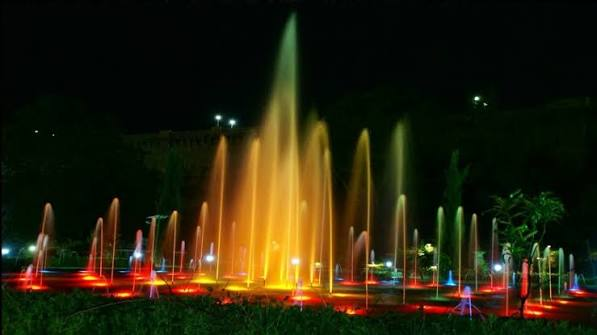
Most people who’ve heard of Brindavan Gardens have heard of it for one reason: the musical fountain. It’s the moment travel photos and reels from Mysuru almost always feature — water jets rising and falling in time with music, lit up in shifting colors against the dark. But there’s more going on behind that show than most visitors realize, and knowing a bit about it actually makes the experience better.
Where the Musical Fountain Came From
Brindavan Gardens itself dates back to 1932, built at the base of the Krishna Raja Sagar (KRS) Dam under Sir Mirza Ismail, then the Diwan of Mysore, who modeled the layout on the Mughal-style Shalimar Gardens in Kashmir. The musical fountain, though, came much later — the idea is said to have taken shape in the 1950s, with the version most visitors see today added and refined through subsequent upgrades, including a renovation by the Cauvery Neeravari Nigam that improved the walkways, lighting capacity, and fountain choreography.
That renovation is also why the fountains dance to a genuine mix of music — Kannada, Hindi, and English tracks, along with instrumental and patriotic pieces — rather than a single fixed soundtrack. If you visit more than once, don’t be surprised if the songs are different each time.
How the Fountain Actually Works
This part surprises a lot of visitors. The musical fountain isn’t just decorative plumbing — it’s a genuinely engineered system. Water is pumped through a set of jets that are digitally controlled and synchronized to the music through what’s often described as an “aquatic organ” — essentially a control system that times each burst of water to match the beat and rhythm of the song playing. Colored lights, and in some sections laser effects, are layered on top of the water movement to create the full visual effect.
The nearby KRS Dam plays a practical role here too — it supplies the water pressure that keeps the broader fountain network in the gardens running, even outside the main musical show.
Where to Watch It From
The musical fountain show takes place on the North Brindavan side of the garden, across the Cauvery river from the main South Brindavan entrance. A dedicated viewing gallery has been built specifically for this — rows of seating positioned to give a clear, front-facing view of the water and light display, along with a rain shelter in case of unexpected weather.
Here’s the part that catches people out: the gallery opens well before the show actually starts, often from around 6:00 PM, even though the fountain itself doesn’t begin until 6:30 PM. Seasoned visitors head there early specifically to claim a good seat, because by the time the music starts, the gallery is usually packed — especially on weekends.
If you’d rather skip the walk around to the North side, boating across the river is an option many visitors take instead, and it doubles as a scenic way to reach the viewing area.
What to Expect During the Show
The show itself runs for roughly an hour on weekdays and stretches longer on weekends. It’s not a single continuous piece — expect several distinct segments, each set to a different track, with the water patterns and lighting shifting noticeably between songs. Some segments lean toward slow, sweeping movements timed to instrumental music; others sync to more upbeat, rhythmic tracks with faster, more energetic water bursts.
Worth setting expectations honestly here: reactions to the show vary quite a bit. Many visitors, especially families and first-time travelers, describe it as a genuine highlight of their Mysuru trip. Others — particularly those who’ve seen larger-scale fountain shows elsewhere — find it modest in comparison. It’s worth going in without expecting a Las Vegas-scale spectacle; it’s a pleasant, well-executed local show rather than an internationally famous production, and enjoying it for what it is tends to make for a better experience.
Tips for Getting the Most Out of It
- Arrive by 6:00 PM if you want a gallery seat. This one detail affects your experience more than almost anything else — a good seat means a clear, unobstructed view; showing up at 6:25 often means standing at the back.
- Bring the kids to the front rows early. If you’re traveling with children, this is worth prioritizing since standing space fills in fast once the show starts.
- Don’t rush off right after the first song ends. The show has multiple segments, and the choreography sometimes builds toward the later parts.
- Carry a light jacket for winter evenings. Mysuru evenings between November and February can get pleasantly cool, and you’ll likely be sitting still for the better part of an hour.
- Skip commercial video equipment. Personal photos and phone videos are fine, but professional videography isn’t permitted without prior authorization from KSTDC, which manages the site.
Is the Musical Fountain Worth Planning Your Whole Trip Around?
For most visitors coming to Mysuru specifically to see Brindavan Gardens, yes — it’s the reason the gardens draw the crowds they do, and skipping it means missing the one experience that’s genuinely unique to this spot compared to other gardens in Karnataka. But it’s worth remembering that Brindavan Gardens has plenty to offer during the day too — the terraced lawns, topiary work, and the walk along the Cauvery are worth a couple of unhurried hours even if you never stay for the evening show.
If your schedule is tight and you can only catch one or the other, our advice is simple: pick the evening. Daytime gardens are lovely but fairly similar to other well-maintained parks across Karnataka. The musical fountain is the one thing here you won’t easily find elsewhere nearby.
For the exact show timings by day of the week, see our detailed guide on Brindavan Gardens timings — this article focuses on the experience itself, while that one covers the schedule down to the minute.
Also Check: Brindavan Gardens Timings: Opening Hours, Closing Time & Musical Fountain Schedule
1 thought on “Brindavan Gardens Musical Fountain: How It Works, Its History & Tips to Watch It Right”